

Brooklyn’s townhouse market is seeing a noticeable change in who is buying and how they use these properties. Townhouses, once marketed mainly as single-family homes, are now increasingly ...

Relm AI's Jackson Reiter on Reinventing Property Search Through Visual Technology

Written by:
Date:
27 Mar 2025
Share via Facebook

Share via Linkedin

Share via X

Copy to clipboard


“Home is not just a box you live in, and the way you find a home shouldn’t be boxes you have to check or filters to select,” explains Jackson Reiter, Co-Founder and COO of Relm AI, a startup rethinking how people search for properties.
In a market where most platforms still rely on search technology designed in the late 1990s, Relm AI has developed a visual search approach with compelling results: a 7.26x higher conversion rate from search to lead generation compared to industry giant Zillow.
The Problem with Traditional Property Search
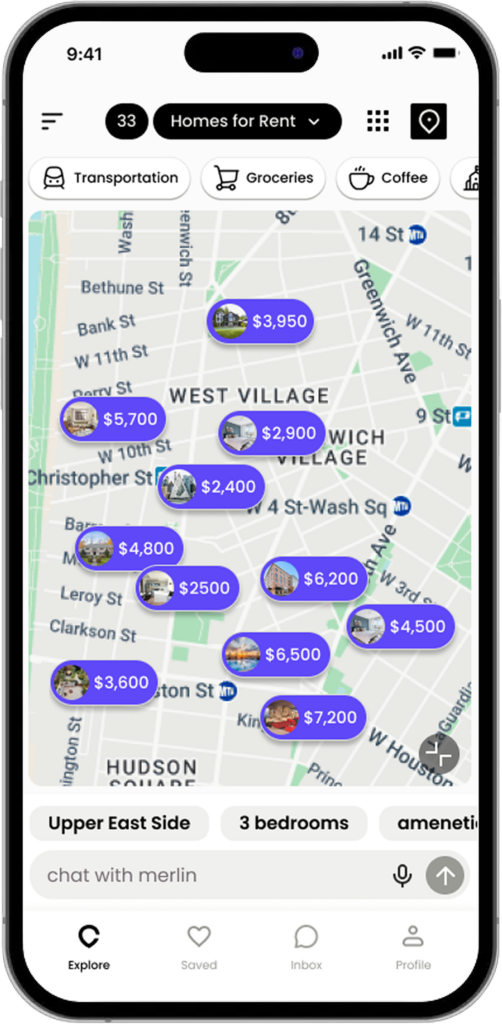
Anyone who’s searched for a home online knows the drill: select the number of bedrooms, set your price range, check a few amenity boxes, and start scrolling through endless listings that may or may not match what you’re truly looking for.
According to Reiter, this approach creates “hard, arbitrary boundaries” on what users can search for. The current real estate search ecosystem—dominated by major platforms like Zillow, which Reiter notes launched around 2004—has attempted to improve by simply adding more checkboxes rather than fundamentally rethinking the search experience.
“What if I need to be near a park where my dog will have plenty of room to run around while I’m at work? And I also want to be near a Starbucks because I work from home during the day?” asks Reiter, highlighting the limitations of conventional search options.
Visual Search: The Proprietary Engine Behind Relm’s Success
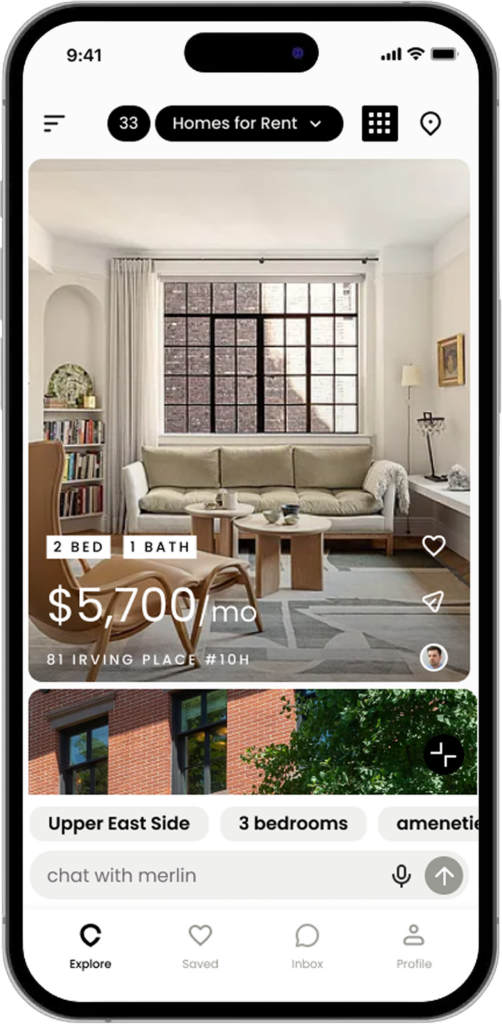
At the core of Relm’s innovation is its visual search capability. Rather than forcing users to translate their desires into data fields, Relm allows them to describe exactly what they want—including aesthetic elements that traditional search can’t capture.
“You can describe in as much detail as you want: ‘I want brick walls and a red door and a bathtub with a view of the city skyline.’ Truly, sky’s the limit,” Reiter explains.
The technology powering this approach is a sophisticated multi-agent system that can query visual elements across thousands of properties with remarkable speed. “We can query 100,000 properties for a single visual identifier in a number of seconds,” Reiter notes.
This approach eliminates multiple layers of abstraction in the traditional property listing process. Instead of agents extracting features from a property, coding them into tabular data, and users trying to reconstruct that mental image through checkboxes, Relm creates a direct visual connection.
Merlin: The AI Agent Guiding the Conversation
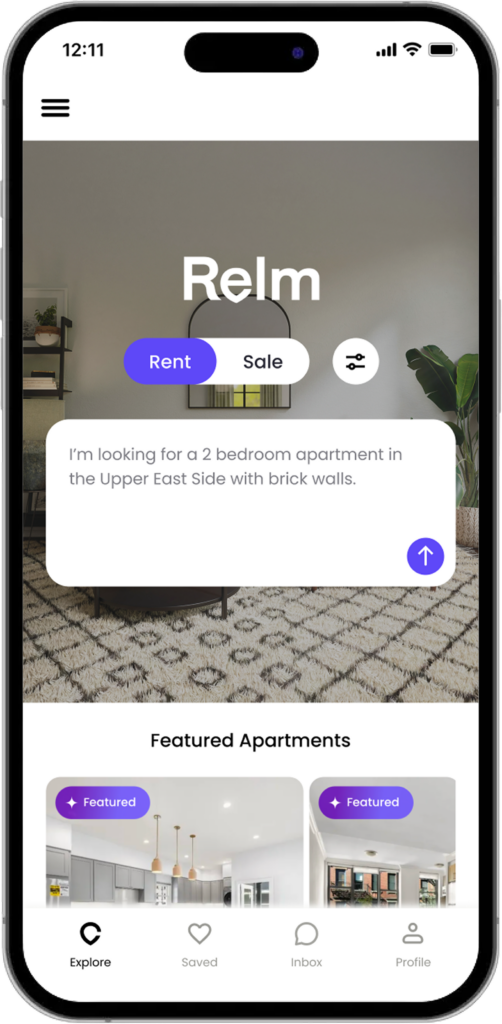
Relm doesn’t just offer visual search—it delivers the entire experience through a conversational interface guided by an AI agent named Merlin. This isn’t merely a chatbot added to a traditional interface; it’s a fundamental integration of conversation into the search process.
“People can get to what they want quicker,” says Reiter. “Almost more importantly, they are able to talk their way into taking action on a property given the conversational part of the site.”
The results are notable. In just five months since launch, Relm has attracted 32,000 unique users with impressive engagement metrics:
- 43% of search users have multi-message engagement (more than two messages)
- Nearly 2% of all users who run a search end up reaching out to an agent
- This translates to the 7.26x higher conversion rate compared to Zillow’s publicly reported metrics
Perhaps most surprisingly, Relm is finding success beyond the tech-savvy demographic many might expect. “We assumed being an AI tech-driven platform, we would have a younger, more tech-forward, metropolitan user base,” Reiter reveals. “When in fact, we found almost the opposite in that most of our users have never used something like ChatGPT before.”
This suggests Relm has found a practical application for AI that appeals to mainstream users by addressing a universal pain point.
A Two-Sided Approach: Built with Agents in Mind
Relm was designed from the ground up with both sides of the market in mind. As Reiter explains, “We picked a spot in the transaction timeline and we tried solving for that… every single time that we tried something, we wound up moving one step farther up the transaction funnel in the process.” This led them to focus on search as the critical first point of contact.
The platform connects searchers directly with listing agents, reflecting Reiter’s background and perspective as a former agent himself.
“We’re a site founded by former agents, and as such, we’re going to operate accordingly, meaning we’re never going to steal or divert people that are interested in your listing away from you,” Reiter says.
Relm also helps agents with the listing process through AI-powered suggestions. By uploading images, agents can receive recommended listing descriptions based on the visuals and historical data, streamlining what has traditionally been a time-consuming process.
What’s Next for Relm?
Currently operating in 16 states and focused on rentals, Relm has ambitious expansion plans. In Q2 of 2025, the company plans to roll out additional states for rental search, introduce home sales capabilities, and release an iOS app.
Reiter is particularly focused on building a “coalition of people that have problems and need solutions” in the real estate industry, a philosophy that guides their approach to innovation.
As the real estate industry navigates technological change, evolving business models, and new regulations, Relm’s visual-first, conversation-driven approach presents a promising direction for property search.
“Let’s go directly to the two parties that are actually involved, which is agent and consumer trying to help do a deal about a property,” Reiter concludes.
Similar Articles
Explore similar articles from Our Team of Experts.


Industry Profiles, Residential Real Estate, Market Analysis & Policy, Real Estate Investment, Industry News, Top Articles
The Austin real estate market is experiencing a notable shift as the post-pandemic boom settles into a more measured pace, with buyer hesitancy emerging as a defining characteristic. After y...