

On LA's West Side, Inventory Is Up. The Homes That Buyers Want Are Still Hard to Find.


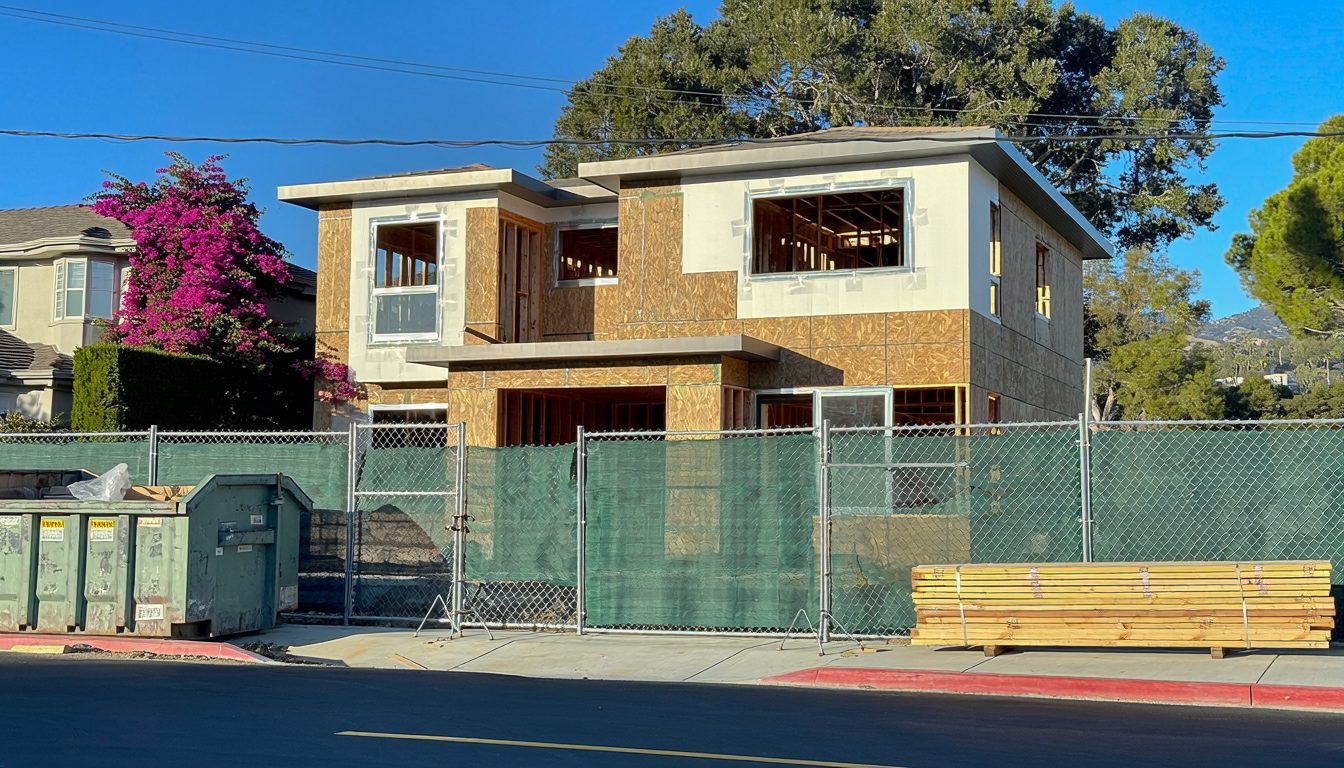
On the west side of Los Angeles, the number of homes for sale has grown, but at the top of the market, more listings have not meant more choice. What buyers want is a specific combination – high-end construction, a strong floor plan, and a substantial lot – and homes that offer all three remain scarce. As a result, much of the inventory that matters most never reaches the open market at all.
The west side, roughly everything west of the 405 freeway, takes in Brentwood, Pacific Palisades, Santa Monica, and Malibu. It is one of the most expensive residential markets in the country, with land at the very top trading at figures like $55 million for a four-acre lot. Jonathan Carr, an agent with Carr Olander Estates under Christie’s International Real Estate Southern California who also works in new development sales with the Don Heller Group, works primarily with ultra-high-net-worth buyers in that market, where he puts the average home price at about $3.6 million. He currently has eight active buyers for whom he has been searching for a year.
What Buyers Are Actually Looking For
The shortage Carr describes is one of fit rather than volume. Inventory on the west side has increased, he says, but homes that combine high quality, a good floor plan, and a substantial property are still in short supply. For his eight buyers, that gap has kept searches open for a year without a home that meets what they are looking for.
The nature of the west side makes those criteria unusually specific. Within a short drive, buyers can choose among beach communities, neighborhoods with a suburban feel, and quick access to the urban life of Beverly Hills and West Hollywood, with mountains and ocean both close at hand. The architecture is just as varied: Spanish styles remain very popular, traditional homes have made a strong comeback, mid-century is well represented, and contemporary and modern designs round out the mix. In a market this varied, buyers are rarely shopping for a generic luxury house. They are looking for a particular kind of house in a particular setting, and the pool of homes that meets every requirement is small.
Buyers also have less reason to compromise than they once did. In earlier years, competition forced quick decisions, and buyers who hesitated risked losing a house to another offer. That pressure has faded, Carr says, and his clients have become far more deliberate and thoughtful. The combination of patient buyers and narrow criteria means searches run longer, and buyers hold out for the home that checks every box rather than settling for the best one currently listed.
Owners Are Staying Put
Demand explains only half of the gap; the other half is on the supply side, where owners of high-value homes have new reasons to think twice before selling. The most direct is Measure ULA, the City of Los Angeles transfer tax on high-value sales: 4 percent on sales above $5.4 million and 5.5 percent above $10.9 million, applied to the full sale price rather than only the amount above the threshold. “People think twice when you’re selling a $10 million home,” Carr says. “It’s a lot of money.” The cost, he adds, has gotten into the psyche of sellers.
The effect on volume has been substantial. Carr says transactions were considerably higher before the tax took effect, and outside analysis supports him: by one estimate, sales above the threshold fell by as much as 55 percent. The tax has also brought in far less than the city expected, raising about $1.2 billion over its first three years against projections of $600 million to $1.1 billion a year. For buyers, the practical effect is fewer high-end homes changing hands inside city limits.
Some of that activity has moved to neighboring jurisdictions that are not subject to the tax. Beverly Hills, particularly the area locals call the Beverly Hills Flats, has seen a lot of action, and Carr says the absence of the tax has helped make it a more desirable place to transact, though he does not credit the tax alone. Malibu is also exempt, but it offers less relief. Its planning and zoning process is notoriously slow, and the time it takes to move a project from start to permit is a significant deterrent to building there. Santa Monica also sits outside the City of Los Angeles, but it offers no escape from transfer taxes: its own Measure GS imposes a 5.6 percent tax on sales of $8 million or more.
New Construction Isn’t Filling the Gap
If existing owners are reluctant to sell, new construction would be the natural way to add the kind of homes buyers are waiting for. Plenty of builders still want to build on the west side, Carr says, but the financing behind those projects has become far more expensive. Private credit that once cost 8 or 9 percent now runs 12 or 13 percent. A builder planning a $10 million house with $7 million in private credit faces a much heavier cost to carry, and unless the land was acquired at the right price, the margin becomes too thin to justify the risk.
Projects already underway face a second problem. Some builders financed their work with five-year adjustable-rate mortgages taken out when rates were low, and those loans are now coming due. Builders who have not finished will have to refinance at substantially higher rates. Carr notes that most borrowers chose longer-term financing, and that the exposure is greater in commercial real estate, but where these loans exist the effect could be severe. “I think some builders are going to struggle to finish projects,” he says.
The longer-term picture is more hopeful, particularly in the Pacific Palisades, where substantial rebuilding is underway after the fire. Carr is emphatic about where that community is headed. “It’s my belief that the Pacific Palisades will be the most expensive community in Los Angeles in five years, ten years from now,” he says. The rebuilding may eventually add a meaningful number of new high-end homes to the west side, but on a timeline measured in years, well beyond the searches his buyers have already been running.
Creating a Deal From Nothing
With so little of the right product reaching the market, finding a home increasingly means going out and creating an opportunity that does not yet exist. One of Carr’s recent searches shows what that looks like. His clients, who own a Paul Williams–designed traditional home in Bel Air, wanted a beach house in Santa Monica, about 20 minutes to the west. They specifically wanted a tennis court, and no property with one was listed.
Rather than wait, Carr’s team went to Google Earth and scanned the west side for homes with tennis courts. They narrowed the results to properties that seemed appropriate, then mailed letters, knocked on doors, and dropped off information until one owner said he was willing to sell. His price was $21 million. Carr’s buyer offered $19 million in cash, and the two sides could not come together. Even so, Carr sees the effort as the kind of work the market now requires. “That’s the kind of creativity that we need to do in order to create a transaction,” he says. “So essentially you’re creating something from nothing.”
Where the Real Inventory Lives
The tennis-court search ended without a deal, but the purchase that did close came through a route that matters more over time: other agents. Through those relationships, Carr’s team found a second property that was not listed and bought it for the same clients for $16.5 million, all cash, with a typical 30-day escrow. In a market this thin, knowing what might be available matters as much as knowing what is for sale. “You have to know the inventory both on and off the market,” Carr says, and that knowledge comes primarily from good relationships with other agents.
The structure of these deals reinforces the point. Carr’s last seven sales have all been cash purchases, so financing rarely sets the pace. What determines whether a deal happens is access to the right property and the ability to act when it appears. The same logic applies to developers. Carr’s advice to anyone looking to build on the west side is to be plugged into off-market channels and to understand what type of seller is on the other side, because acquiring the land at the right price is what makes a project pencil.
Finding the home is not the last hurdle. Insurers had been retreating from the area for years, and the Palisades fire made fire coverage a deciding factor in whether a purchase goes through. On a recent $8 million purchase, Carr’s buyer received a first quote of $135,000 a year for fire coverage alone; they eventually negotiated it down to $80,000. Many providers have pulled out of the area, and an insurance contingency, which lets a buyer exit escrow without reasonable coverage, has become standard. “Insurance is without a doubt killing some deals,” Carr says. His advice is to start shopping for coverage as soon as a buyer becomes interested in a property, not after entering escrow.
What Comes Next
How long the gap between inventory and fit persists depends largely on when buyers regain confidence, and Carr does not expect that soon. He points to a set of macro concerns – inflation, interest rates, the deficit, the war, and other global events – that buyers are struggling to get their arms around. “I think 2027 is going to be based on uncertainty and a lack of clarity,” he says. “Until we get that, I think it’s going to be a somewhat difficult market.”
The hesitation is not a lack of means. Equity markets are at all-time highs, AI spending is generating enormous wealth, and some of the strength of the San Francisco market has begun to reach Los Angeles, though not yet in full force. “The wealthy are feeling wealthy for sure,” Carr says. “It’s just a question of do they think the timing is right to do something.” That combination is what makes the supply picture so consequential. If clarity returns and that capital begins to move while existing owners stay put and new construction remains constrained, the buyers who have been waiting will be competing for the same short list of homes that already takes a year to find.
About the Expert: Jonathan Carr is an agent with Carr Olander Estates under Christie’s International Real Estate Southern California and works in new development sales with the Don Heller Group in Los Angeles.
Similar Articles
Explore similar articles from Our Team of Experts.

In Warminster, a middle Bucks County township where many homes date to the 1950s and 1960s, a split has opened between properties that are move-in ready and those that need work. According to Tracey Hill, a 20-year real estate veteran who recently opened an office for Innovate Real Estate in Bethlehem, Pennsylvania, 54% of homes ...
The narrative forming around North Jersey’s rental market is that it’s softening. By at least one measure, that’s accurate: leasing teams are working harder, showing more units, fielding more inquiries per signed lease, and spending significantly more on marketing than they did three years ago. But the actual rents tenants are paying have held up ...

Compliance has become the defining pressure in UK facilities management, and confidence in meeting it is falling. In SFG20’s State of Facilities Management 2026 Report, a survey of nearly 200 built-environment professionals found that 72% named improving compliance and safety as their top priority. Only 54% were confident their organization could achieve it, a nine-point ...
The conventional assumption is that downsizing seniors and young families shop in different price tiers. In Doylestown, Pennsylvania – the commercial center of Bucks County – those two groups are increasingly circling the same listings, according to Deana Corrigan of The Deana Corrigan Team at Compass. The competition is reshaping how homes get priced, how ...
The math on a fix-and-flip in metro Atlanta looks straightforward on paper: buy a distressed property at a discount, renovate it, sell it at market value, pocket the spread. In practice, the spread is shrinking from both directions. Sellers of distressed properties are asking prices that reflect peak-market expectations rather than current conditions, while construction ...

