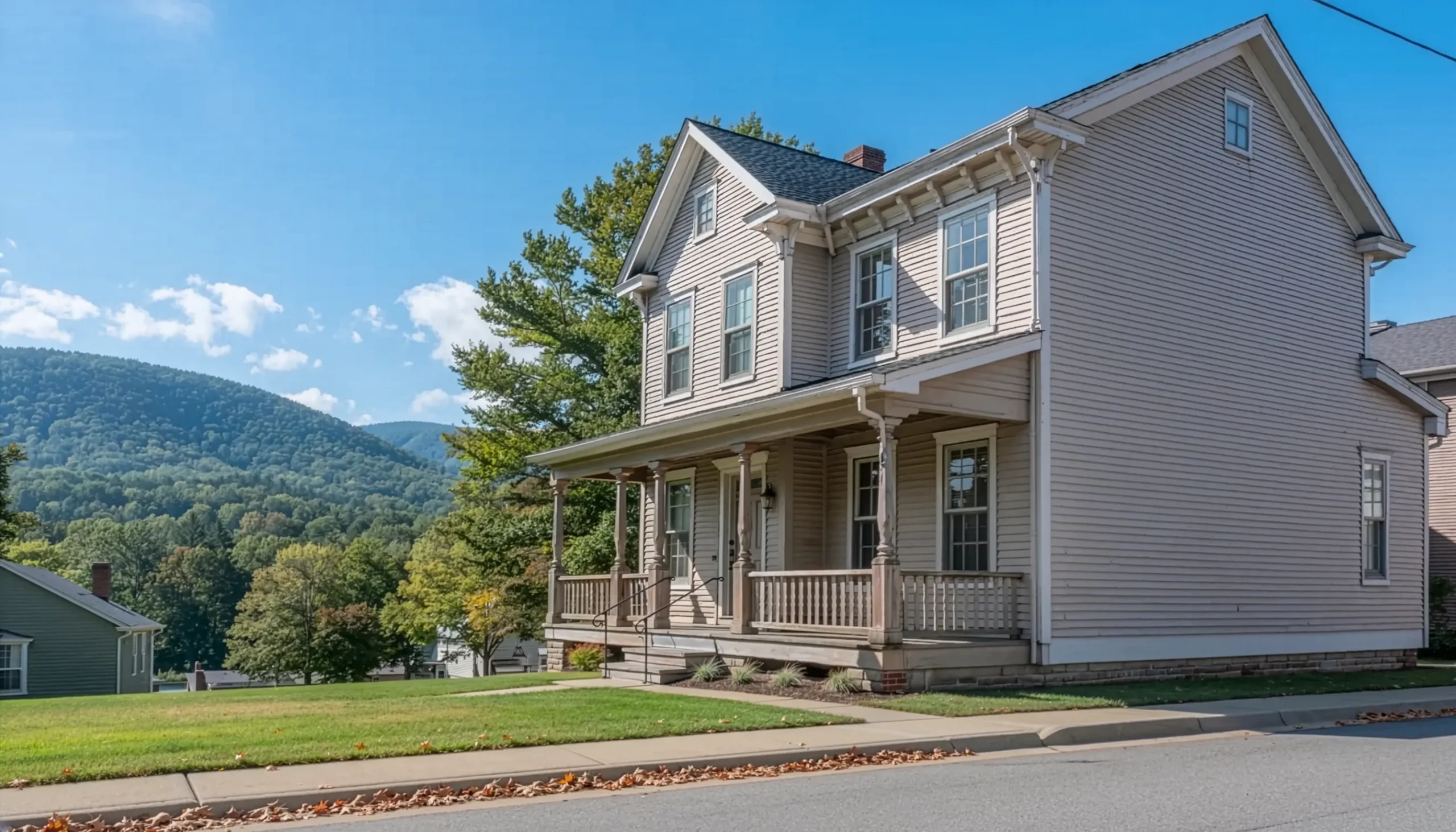
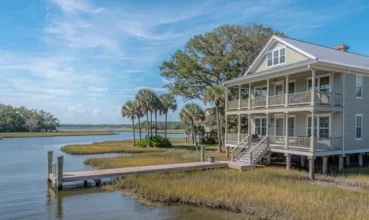
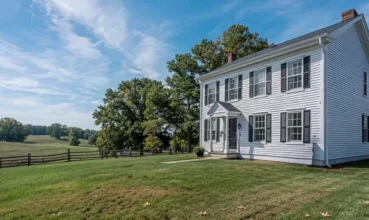
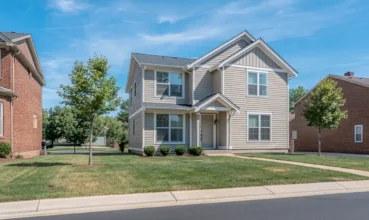
Most conversations about housing affordability focus on price. In rural northwest Pennsylvania, the barrier is often the house itself. Much of the region’s housing stock was built in the late 1800s and early 1900s, and these homes frequently fail to meet the minimum property standards required by VA, FHA, and USDA loan programs. That mismatch between what is available and what lenders will finance determines who can buy, what they can buy, and how long it takes to close.
Karlene Smith, broker at Hometown Regional Realty in Warren County, Pennsylvania, has spent nearly two decades navigating these dynamics. The area sits in the heart of the Allegheny National Forest, with towns separated by 30-mile stretches of forest and river. There is no speculative building. “If you want a new house, you have to build it,” Smith says. And homeowners who do build tend not to update for a decade afterward, leaving the broader market dominated by homes that were last renovated decades ago – if they were renovated at all.
When the House Itself Is the Obstacle
The problems that surface during inspection and appraisal here are not the cosmetic complaints common in newer suburban inventory. Smith describes homes with knob-and-tube wiring, fuse boxes that insurance companies refuse to write policies on, bedrooms without heat, and septic systems installed 30 or 40 years ago that fail testing. On recreational camps – common in this forest-heavy region – she has encountered septic systems made from old metal 55-gallon drums with holes shot in the bottom to let waste drain out.
These conditions matter because government-backed loan programs all require properties to meet baseline habitability standards. Peeling paint, missing handrails, inadequate heating, and faulty electrical systems can each trigger appraisal flags that delay or kill a deal. “It’s got to have a good roof; it’s got to have a good foundation for any loan,” Smith says.
Her practice is to walk buyers through likely issues before the appraiser arrives. “If I know they’re getting a VA loan, FHA, or rural housing loan, I’m walking through the house and educating them,” she says. The goal is to address fixable problems in advance, because if the appraiser flags them first, it means a second trip and potentially another inspection fee for the buyer. For buyers using these loan programs, the difference between a smooth closing and a stalled one often comes down to whether someone identified the peeling paint or missing handrail before the appraiser did.
The VA Loan Stigma
Among these loan types, VA loans carry a particular stigma in the area. Smith describes sellers who refuse outright to consider VA-backed offers – not because of the loan terms, but because of a persistent negative perception about the process. The appraisal requirements for VA loans, Smith notes, are largely the same as those for FHA and USDA loans. The resistance is reputational rather than substantive. She compares it to the stigma around manufactured homes – a bias that persists despite comparable standards.
The cost of that bias falls on veterans. “They’ve got a benefit where they don’t have to put any money down to do the loan, and a lot of the closing cost fees are waived for them,” Smith says. Yet many cannot take advantage of that benefit because sellers refuse to entertain their offers. In a market with limited inventory, each rejected offer narrows an already small pool of options.
Seller Assist and the Misunderstanding That Stalls Deals
Down payment and closing costs remain a persistent hurdle, particularly for buyers using government-backed financing. Seller assist – where the seller agrees to let the buyer roll a portion of closing costs into the mortgage – is a standard tool, but Smith says sellers routinely misunderstand it as paying someone else’s bills.
“The sellers feel, when you take them an offer that has seller assist, they say, I’m not paying for their closing costs. Why should I pay for their closing costs?” Smith explains. Her reframe: the seller is not paying anything out of pocket. The buyer finances the closing costs over the life of the loan. “They’re going to pay for that over time, over the next 30 years,” Smith says. She adds that in a low-rate environment, rolling in closing costs can be cheaper than financing home improvements on a store credit card at 18 percent interest.
Smith traces the mechanism to post-2008 regulatory changes. Under Dodd-Frank, borrowers could not separately borrow their closing cost funds. Lenders structured seller assist into transactions to work within those rules. Whether sellers accept it, Smith says, depends heavily on whether the listing agent explained it upfront. She always addresses it at the listing appointment so it does not become a deal-breaker when an offer arrives.
A Market Still Adjusting After the Pandemic Pricing Surge
The region is also contending with a pricing hangover from the pandemic. Low inventory and a rush of buyers seeking more space drove multiple-offer situations and above-market sales. Smith says many current sellers still expect those prices. “I see a lot of houses that are extremely overpriced,” she says. Low inventory is enabling some of those prices to hold – buyers absorb the premium because alternatives are scarce. The result is that some buyers end up stretched thin. “You shouldn’t be house poor,” Smith says. “You should still be able to take your family and go on vacation.”
Meanwhile, the buyer pool is shifting. The area’s aging population is downsizing from large two-story homes into single-level ranches, but that inventory barely exists in a housing stock built primarily before modern subdivision patterns took hold. What newer construction does exist – homes built in the 1960s through 1980s – often has not been updated, leaving buyers choosing between century-old homes with infrastructure problems and mid-century homes with outdated finishes and systems.
Compounding these challenges, Smith says only four or five agents in the area work full time. The rest hold other jobs for steady income and benefits, which limits the training and market knowledge available to both buyers and sellers.
Looking ahead, Smith sees pressure from technology reshaping the agent’s role. She points to referral companies using internet data to generate leads and charging up to 40 percent of an agent’s commission. “If I’m doing all the legwork and all you did was get a name and a number off the Internet, you’re not getting 40% of my commission,” she says. In a market where the agent’s value lies in knowing which houses can survive an FHA appraisal and which cannot, that knowledge gap between experienced local agents and algorithm-generated referrals carries real consequences for buyers.
About the Expert: Karlene Smith is a broker at Hometown Regional Realty in Warren County, Pennsylvania, and has worked the area for nearly two decades.
This article is based on information provided by the expert source cited above. It is intended for general informational purposes only and does not constitute legal, financial, or real estate advice. Readers should conduct their own research and consult qualified professionals before making any real estate or financial decisions.