Bucks County stretches from the Philadelphia city line north to the Delaware River, and county-wide data describes a tight seller’s market. But the number that matters most to buyers and sellers is not the median price or the months of supply – it is a threshold around $500,000 that splits the county into two functionally separate markets. Below it, homes move in days. Above it, the audience shrinks fast and properties linger.
David Siwy, broker of record for Pennsylvania, Delaware, and Maryland at New and Modern Group, works across this divide from his base near Pipersville, a rural pocket in the county’s northern half. With 16 years in residential real estate and three prior years as a loan officer, he sees the split playing out in nearly every transaction.
“When you go above that $500,000 mark, you drop off a lot of people that can afford it,” Siwy says.
Where the Inventory Actually Is
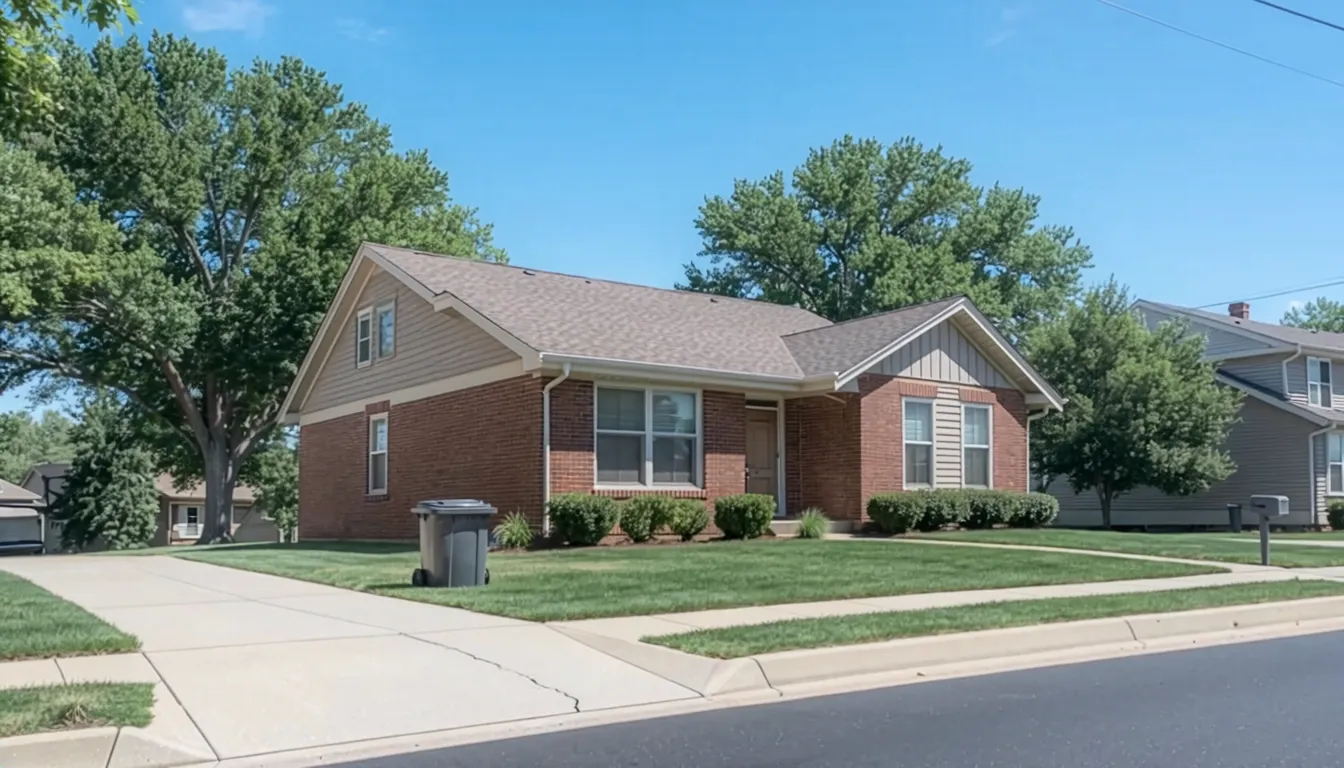
Bucks County’s geography mirrors its price structure. The southern end – Croydon, Bristol, Levittown, Bensalem, Feasterville – offers more affordable housing and more of it. The central and northern corridor running through Doylestown, New Hope, Buckingham, and Pipersville tilts toward higher-end homes. Farther north toward Quakertown, prices moderate again.
Pipersville sits in the expensive middle band, and its defining characteristic is scarcity – not of demand, but of buildable lots that have actually been built on. Large tracts of farmland remain in the hands of longtime owners who have not subdivided. Homes rarely come in under $400,000, and inventory stays thin.
“There’s more land, I feel, than there are houses,” Siwy says. “It’s a nice little area that’s kind of untapped.”
That scarcity shapes who buys there. Pipersville is not a first-time-buyer market. Siwy describes it as a destination for second or third purchases – households that have sold a starter home and are looking for space, acreage, and distance from suburban density. “You’ve moved up, and you’ve sold your first or second home. Now you’re in your hopefully forever home,” he says.
The Buyer Pipeline Feeding the County
Demand in the broader county draws from three overlapping migration streams, according to Siwy. Younger generations are moving out of Philadelphia, where their families have lived for decades. Buyers are crossing the river from New Jersey, drawn by lower property taxes. And New York transplants – especially from northern New Jersey and Manhattan – are arriving in search of affordability and a commutable distance to the city via the Trenton train line.
Below $400,000, these buyers collide with limited supply. Siwy says homes in that range can go under contract within a day to a week. First-time buyers make up a large share of that demand, and many are older than the stereotype suggests – he has closed with buyers as young as 20 and as old as 68.
One factor easing the path for those buyers is Pennsylvania’s grant programs. Siwy notes that qualifying buyers can stack multiple grants – one for $10,000, another for $5,000, another for $15,000 – reaching as much as $40,000 in assistance that does not require repayment as long as the buyer stays in the home for a specified period. For households stretching to afford entry-level pricing, that layering can close the gap between what a lender will approve and what a purchase actually costs.
What Happens Above the Line
The market above $500,000 operates on different rules. The pool of qualified purchasers is smaller, and buyers at that level arrive with more specific expectations. Siwy points to a current listing at $1.25 million – an older home on six acres with two pole barns, a two-bedroom cottage, a pond, and a pool. The property has development potential, including the possibility of adding a flag lot. But it requires a buyer who sees that potential rather than one expecting move-in-ready new construction.
“A lot of people who are spending over a million dollars want new construction,” Siwy says. “They don’t want to have to go in and fix something.”
Concessions follow the same divide. Below $300,000 or $400,000, Siwy says sellers occasionally agree to assist with closing costs, sometimes structured by raising the offer price and having the seller credit back the difference. Above that range, sellers have less reason to negotiate – unless an inspection turns up a material issue.
Why a Foreclosure Wave Looks Unlikely Here
Siwy is skeptical of predictions that a foreclosure crisis is approaching Bucks County. His reasoning centers on equity: owners who bought years ago have seen values rise steadily, which gives them an exit even if they can no longer sustain payments on an adjusting ARM.
“If you bought your house at $600,000, now it’s worth a million, and you only owe $400,000 – even if you took a haircut and sold it at $800,000, you’re still selling it and paying off the mortgage,” he says.
If a correction materializes, Siwy expects it to land in the higher price tiers, where ARM exposure is more common, and the buyer pool is already thinner. For homes under $300,000 or $400,000, he sees persistent demand from first-time buyers and investors as a floor. “I don’t see a crash coming for houses under two, three, four hundred thousand,” he says.
He draws a distinction between current conditions and the 2008 crisis. That crash, Siwy says, was driven by bad mortgages and subprime lending. Today’s risk is different – rising prices and adjustable rates may strain some owners – but the equity cushion in markets like Bucks County means most homeowners who need to sell can do so without a short sale or foreclosure. The pressure, if it comes, is more likely to cool prices at the top of the market than to trigger forced sales across it.
About the Expert: David Siwy is broker of record for Pennsylvania, Delaware, and Maryland at New and Modern Group, working across Bucks County, Pennsylvania, from his base near Pipersville.
This article is based on information provided by the expert source cited above. It is intended for general informational purposes only and does not constitute legal, financial, or real estate advice. Readers should conduct their own research and consult qualified professionals before making any real estate or financial decisions.