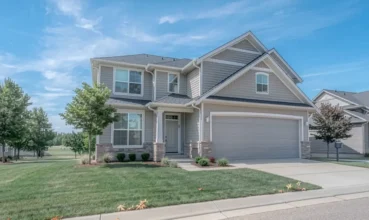
The condo market and the single-family market in Broward County, Florida, are no longer moving in the same direction. Building inspections and assessments tied to aging high-rise structures have slowed condo sales across the region, while single-family homes – particularly in strong school districts – are absorbing most of the buyer and investor demand. The split is changing how capital flows through one of South Florida’s most centrally located counties, according to Amy Berman, a broker with The Keyes Company in Hollywood, Florida.
One condo Berman is handling carries a roughly $300,000 assessment alongside a monthly HOA near $1,000. “It doesn’t balance out,” she says. The 40-year and 50-year structural inspections now being enforced more aggressively across the region are generating high, sometimes unexpected costs for condo owners and prospective buyers. The result is measurable hesitation on the condo side and a visible migration of both families and investors toward single-family properties.
Berman traces the shift to the Champlain Towers collapse in Miami Beach, which accelerated enforcement of building inspections across South Florida’s condo stock. The assessments that followed have added costs that many buyers and owners did not anticipate. “I think the condo market is very different than single-family right now,” she says.
School Districts Are Setting the Pace
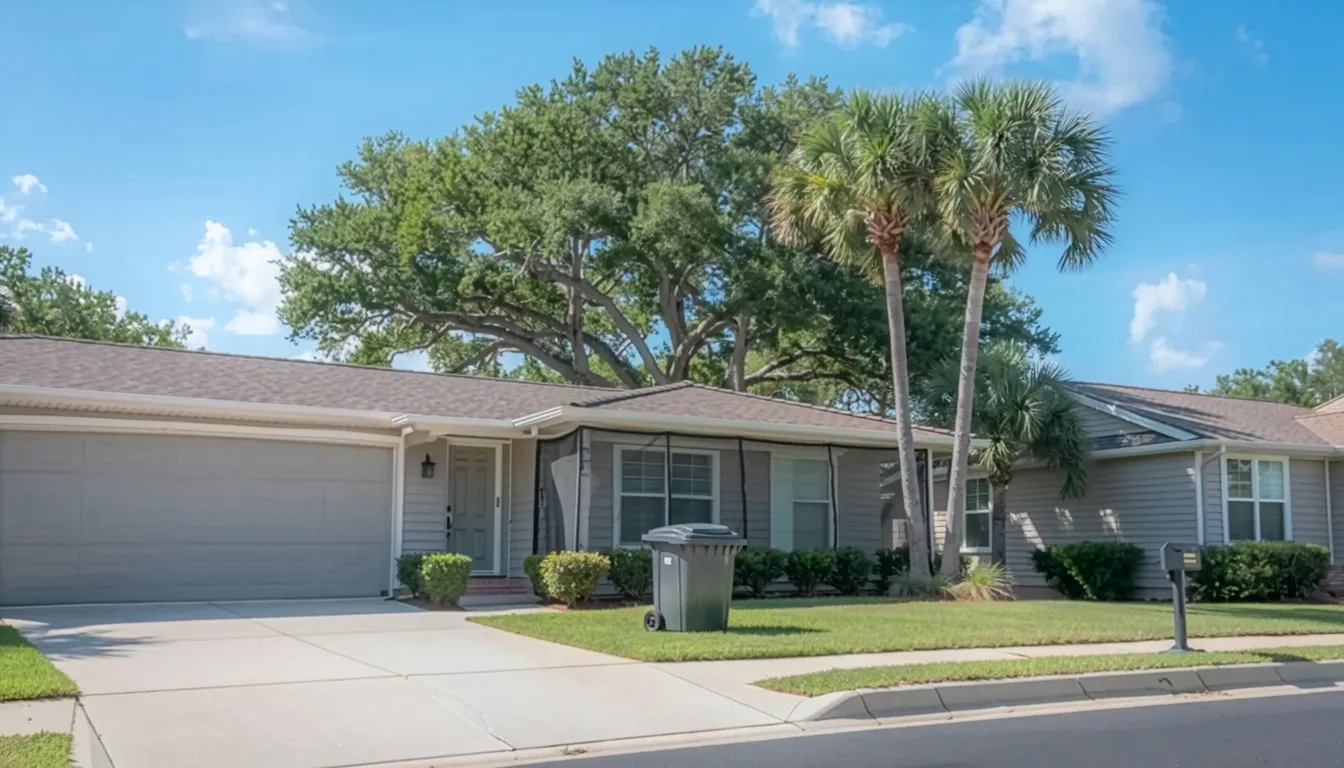
Demand in Broward County is increasingly organized around school quality. Berman says buyer focus on school districts is more intense than she has seen in recent memory. Areas like Davie and Cooper City, which have strong public school systems, are seeing shorter listing times and consistent activity. Countywide, she estimates homes are sitting on the market about five months on average, but properties in top school districts sell faster.
The pattern extends to investors. Rather than chasing rental yield in condo buildings, investors are targeting single-family homes in the same family-oriented neighborhoods. Properties in good school districts attract reliable tenant demand. “My investors are looking in those areas too because they know it’s a good rental opportunity,” Berman says. Single-family rentals also avoid the condo association application process and HOA constraints, giving landlords more control over who they rent to and how they manage the property.
A Market Split at the Extremes
The current inventory in Hollywood clusters at two ends of the condition spectrum. Well-maintained homes in desirable locations are generating immediate interest. Berman describes a recently listed property in Davie – a family home in a strong school district with ample land – that drew heavy showing traffic almost immediately. “Someone asked if we were doing an open house and I said I don’t even know if I have to,” she says.
At the other end, distressed properties – including homes in probate with deferred maintenance – are still attracting buyers willing to invest in renovations. What Berman is not seeing much of is activity in the middle. The market is clustering at the high-condition and low-condition ends rather than distributing evenly across the spectrum. For buyers, that means competition is concentrated in two distinct pools: move-in-ready homes in prime locations, and fixer-uppers priced low enough to justify the renovation cost.
Creative Deal Structures Are Filling the Gap
Seller expectations remain anchored to peak pricing from recent years, even as conditions have shifted. Berman describes a common dynamic: sellers remember when a home was worth $2 million and resist accepting $1.85 million. “The market hasn’t fallen, but with interest rates going up, they have to be a little bit more realistic,” she says.
Rather than relying solely on price reductions, Berman is using financing structures to bridge the gap. One tool she highlights is the 2:1 buydown, where the seller buys down the buyer’s interest rate for the first two years of the loan. At a 7% prevailing rate, the buyer pays 5% in the first year and 6% in the second, reverting to 7% in the third. The arrangement costs the seller less than a straight price cut while lowering the buyer’s early monthly payments. Berman says the structure benefits both sides because buyers within that window may also have an opportunity to refinance if rates decline.
She also points to city and county programs that offer funds to new homeowners – money that carries no interest and does not require repayment until the property is sold. These programs exist across multiple municipalities but are not widely known. “They have a significant amount of money there, if you know how to find it,” Berman says. For buyers who qualify, the programs can reduce out-of-pocket costs at closing without adding to monthly carrying expenses.
Where the Opportunity Sits
For investors evaluating Broward County, Berman points to two areas in Hollywood specifically: Hollywood Hills and downtown Hollywood. The downtown area, she says, is in an active growth phase with ongoing development. Dania Pointe, a mixed-use community developed nearby in recent years, has added to the area’s appeal.
Hollywood’s central position within Broward County – roughly equidistant from Miami and Palm Beach, about five miles from the beach, and five minutes from Fort Lauderdale’s airport – supports both residential and rental demand. The price range spans from around $200,000 to $8 or $10 million, which means the market accommodates a wide band of buyer and investor profiles.
Berman’s advice on timing is direct: buy when the need is real, not when conditions feel perfect. “The longer you wait, the more things are going to keep changing,” she says. “Maybe the mortgage rates go down, but that means the price goes up. Maybe the interest rates go up, but that doesn’t really lower the price.” In a market where condo assessments have redirected demand and school districts are driving pricing power, the buyers and investors acting now are the ones whose decisions are driven by life circumstances – a growing family, a downsizing household, a rental strategy built around specific neighborhoods – rather than attempts to time interest rates or price cycles.
About the Expert: Amy Berman is a broker with The Keyes Company in Hollywood, Florida, covering Hollywood and the surrounding Broward County area.
This article is based on information provided by the expert source cited above. It is intended for general informational purposes only and does not constitute legal, financial, or real estate advice. Readers should conduct their own research and consult qualified professionals before making any real estate or financial decisions.