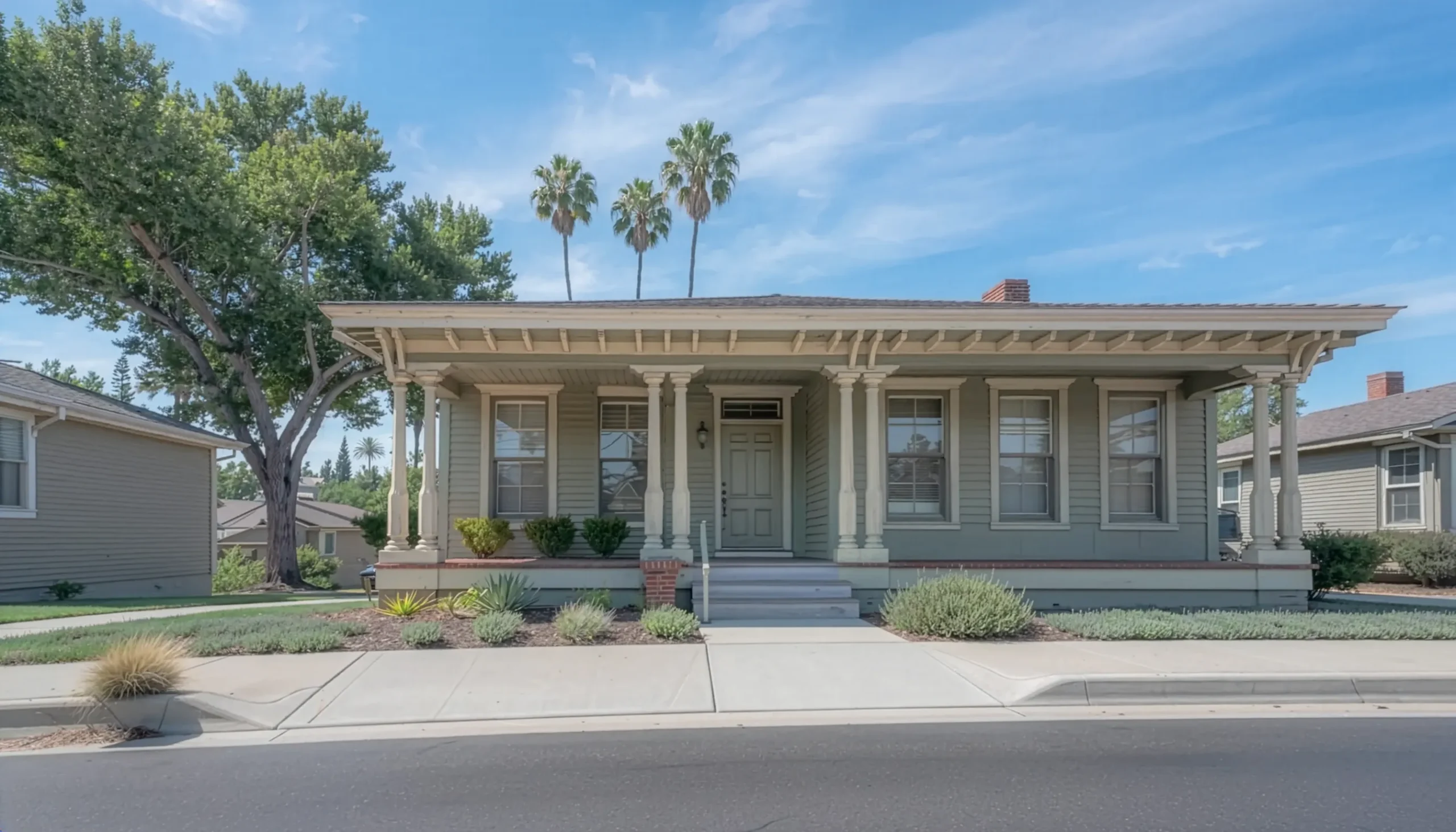
Coronado, California, sells roughly 275 to 300 homes a year across an island with no vacant land and no room to expand. That fixed supply has always shaped the market, but it is now producing visible fault lines between price tiers. Oceanfront and bayfront properties above $10 million are setting new records. Older homes on buildable lots between $3 million and $5 million are drawing multiple offers and overbidding. The $5 million to $10 million range – where homes tend to be aging but not yet teardown candidates – is where activity has slowed, and properties are sitting longer, according to Scott Aurich, a broker who has worked the Coronado market since 1989.
“The homes that are old and on decent lots and good locations that are three to five million dollars, there’s multiple offers, overbidding on almost everything that comes on the market in that price range,” Aurich says. The $5 million to $10 million segment, by contrast, “is where the slow spot is.”
Why Teardown Lots Are Driving Competition
The entire island is built out. Buyers who want to construct a new home must purchase an existing one and demolish it, which has turned older homes on good lots into the island’s primary development pipeline. That scarcity is concentrating competition at $3 million to $5 million, a price range that might otherwise seem unremarkable for coastal California.
At the other extreme, the ultra-luxury tier has pushed well past prior ceilings. A home on Ocean Boulevard recently sold for $28 million. A property that previously traded at the same price was listed last week for $39 million after renovations. Two years ago, the highest sale on the island was $17.5 million. “The big, big top of the market has kind of blown the roof off where it was,” Aurich says.
For buyers considering Coronado, the practical consequence is that entry at the lower end now requires competing against developers willing to overbid for land value alone, while the middle tier offers less competition but longer timelines and properties that often need significant work.
A Shifting Buyer Mix
Coronado has long drawn second-home buyers from Arizona and from wealthy families in Mexico, but the source of capital at the top end is broadening. The $28 million Ocean Boulevard buyer came from the tech sector – specifically data center development – a buyer profile the island had not historically attracted. Northern California tech buyers began arriving during the pandemic and have continued since.
Arizona remains the largest feeder market, with buyers from Phoenix and Scottsdale purchasing homes to escape summer heat. Mexican buyers, particularly from Mexico City, have maintained a longstanding presence, especially in the island’s Coronado Shores high-rise complex – ten buildings with roughly 1,500 units on the beachfront. Aurich says most long-term owners on the island could not afford the home they currently live in at today’s values, a sign of how much prices have escalated even as transaction volume has leveled off.
Off-Market Deals and the New Brokerage Landscape
In Coronado’s upper price tiers, a significant share of activity occurs off-market. Aurich says the higher the price, the less need there is for broad public exposure. “When you’re up over ten million, there’s not as big a need to have it exposed worldwide,” he says. These transactions have historically happened through broker-to-broker relationships regardless of firm affiliation.
That dynamic has shifted with industry rule changes around clear cooperation and with Compass building what Aurich describes as an intercompany MLS for off-market listings – a system now expanding to affiliated brands. He notes that off-market dealing itself predates recent policy changes. “We were doing it before – it wasn’t illegal or different until clear cooperation was set up by the MLSs.”
For sellers weighing whether to list publicly or market privately, Aurich says the tradeoff scales with price. Lower-priced properties benefit from broad exposure because competition among more buyers pushes prices to market value or above. At the highest prices, the pool of qualified buyers is small enough that targeted broker relationships can be equally effective – though limiting exposure always carries the risk that a willing buyer never learns the property is available.
Historic Designation as a Practical Calculation
Coronado’s housing stock includes a significant number of architecturally older homes, and historic designation carries concrete financial implications through California’s Mills Act. Owners of designated homes can receive property tax reductions of as much as 50 percent – a meaningful offset given that historic renovations tend to cost more than standard remodels due to approval processes, material-matching requirements, and longer permitting timelines.
Exterior changes to designated homes require approval from a Historical Resource Commission, and materials and design must be consistent with the home’s historic character. Interior work is largely unrestricted. Aurich says the added cost and time of meeting these requirements is the main practical downside of designation.
The city has surveyed older homes and sorted them into tiers – Tier 1 being most likely historic, Tier 2 possible, and a former Tier 3 that has since been dropped from the review process. Aurich says this system has made the market more transparent. “It’s kind of made it a little clearer to people going in whether or not the house is going to be designated historic,” he says. Buyers can now factor designation likelihood into their purchase decision rather than discovering it during permitting.
A Market Running at a Steadier Pace
After a surge that began in the second half of 2020 and ran through 2022, Coronado’s transaction volume has settled. Aurich estimates the island will sell 275 to 300 homes this year, below the roughly 350 sold during peak years. “Between 23 and 26 it’s been on kind of a lower, slower pace – hasn’t been going up, maybe not going down too much either,” he says. “Pretty level.”
Valuations outside the ultra-luxury tier and the teardown-lot segment have held relatively steady rather than climbing. The two areas where prices have moved sharply – record-setting waterfront sales and competitive bidding on buildable lots – reflect specific scarcity rather than broad market appreciation. Buyers and sellers operating in the middle tier face a different calculation: adequate supply, fewer competing offers, and properties that require patience on both sides of the transaction.
About the Expert: Scott Aurich is a broker covering Coronado, California, who has worked the Coronado market since 1989.
This article is based on information provided by the expert source cited above. It is intended for general informational purposes only and does not constitute legal, financial, or real estate advice. Readers should conduct their own research and consult qualified professionals before making any real estate or financial decisions.